About Us
OCULARIST - DEFINITION
An Ocularist is a trained professional who fits and manufactures Custom Designed Ocular Prostheses (artificial eyes). An Ocularist is also qualified to fit Scleral or Haptic Shells (an artificial eye shell that fits over a blinded eye). The Ocularist's domain is the eye socket and blinded Phthysical eyes.
The Ocularists aim to restore lost orbital volume and ocular lid contours and function, through an eye prosthesis, as well as to buoy the spirit of the patient.
SCOPE OF PRACTICE
The Profession of Ocularistry assists patients to become more functional and to restore the appearance of the patient and where necessary, collaborates with Ophthalmologists, Optometrists, Plastic Reconstructive Surgeons, Psychologists, Psychiatrists and Maxillofacial Surgeons.
The Ocularist examines and assesses the globe, socket and related structures to facilitate the manufacture and fitting of an appropriate, comfortable and safe Prosthesis or Prostheses and/or appliance or appliances to restore the dignity, appearance and functionality of the patient. This includes the eye socket, blinded eye, phthysical eye and the surroundings.
Ocularists promote orbital and ocular health by rehabilitating the socket / orbit through manufacturing, fitting and maintaining of Ocular Prostheses and Scleral / Haptic Shells for those who have had an eye or eyes enucleated, eviscerated, exenterated and those with total or partial vision loss and with an unsightly, damaged and/or disfigured eye known as a phthysical blinded eye.
THE OCULARISTS ASSOCIATION OF SOUTHERN AFRICA (OASA)
OASA understood the importance of Professional Bodies and when the NQF Act was promulgated in 2008, OASA initiated the application for recognition through SAQA, becoming one of the first forty Professional Bodies to be recognised by SAQA.
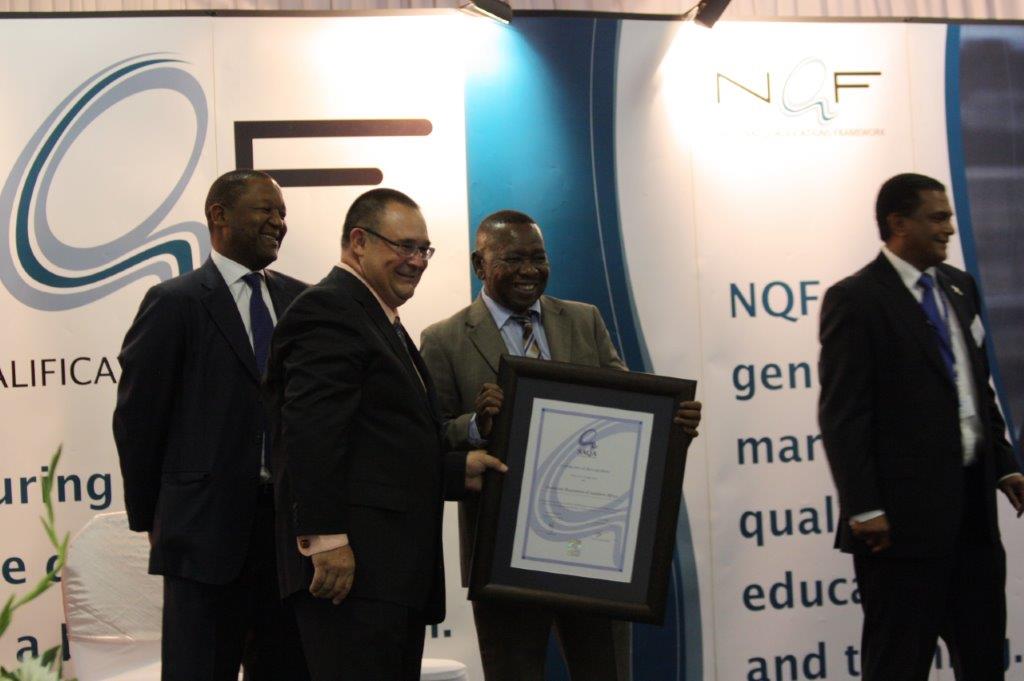
OASA, to our knowledge, is the first organisation globally to be recognised as a Professional Body and has registered the Designation of Ocularist on the NQF (National Qualifications Framework).
OASA, as a non-statutory Professional Body, has Voluntary Membership and focuses on creating an enabling environment for professional development in the discipline of Ocularistry, and growing the maturity of that discipline by contributing to its body of knowledge, it’s relevance, governing principles and accessibility to new and existing practitioners / Ocularists.
OASA’s influence is limited to its Voluntary Members.
As extracted from the SAQA website (2024.09.14) –
Non-statutory bodies, are considered ‘voluntary’, as professionals are not required to be registered with the professional body in order to practice their profession. A Non–statutory body is not constituted through an Act of Parliament, but in response to a need identified by a collective of practitioners. No law compels anyone to be a member of a non-statutory professional body. Recognition from SAQA as mandated by the NQF Act, does not give the professional body statutory status.
Both the statutory and non-statutory bodies must meet the criteria for recognition as a professional body as stipulated in the Policy and Criteria for the Recognition of a Professional Body and the Registration of a Professional Designation for the Purpose of the NQF.
SAQA must emphasise that:
- Non-statutory professional bodies have no statutory authority to regulate any trade, occupation or profession;
- A non-statutory professional body exercises professional authority by virtue of its constitution/founding document, which binds its members only; and
- Membership/registration concerning a non-statutory professional body is voluntary.
MISSION STATEMENT
OASA's aims are:
- primarily to nurture its Members, both professionally and academically.
- to support the care that every patient receives from an Ocularist.
- to sustain and further develop the working relationship with all stakeholders, including Optometrists, Ophthalmologists, Plastic and Reconstructive Surgeons, Psychologists, Psychiatrists and Maxillo-Facial Surgeons, in order to achieve the best possible treatment and holistic rehabilitation of patients.
OMBUDSMAN
The Ocularists Association of Southern Africa has appointed Mr Harry Rosen as Ombudsman. He is available to Designated Ocularists and patients in order to maintain an open and honest work ethic in Ocularistry.
Patients of OASA Designated Members have recourse to the OASA Ombudsman and/or a Court of Law.
PATIENT INFORMATION
All the Designated Ocularists of OASA use Methyl Methacrylate to manufacture Ocular Prostheses.
In order to achieve the best result, multiple fitting appointments to aid the manufacturing processes may be required. The fitting period may extend over a few months to ensure that the Ocular Prosthesis will be accurately and symmetrically reproduced to resemble the remaining eye.
CUSTOM-DESIGNED PROSTHESIS
A custom-designed Ocular Prosthesis is manufactured, beginning with an impression of the socket, progressing to a model fitting, hand-painted iris, and veins, to achieve a final Prosthesis with the best comfort, movement, and natural appearance achievable.
An Ocular Prosthesis has a lifespan of five years. If not replaced, this could lead to recurring discharge and irritation to the socket. If the shape of your socket changes due to aging or damage, a new Prosthesis is often appropriate for better comfort and cosmesis.
When fitting a child, a new Prosthesis is required at regular intervals during the growing years so that the socket and Prosthesis keep pace with the changes occurring in the facial bone structure.
Ophthalmologists surgically fit many types of implants. The Ocularist is trained to manufacture an appropriate Prosthesis, whether an implant is present or not.
Blinded phthysical Eye for the fitting of a Scleral or Haptic Shell The above fitting process is followed, but extra care is needed to safeguard the existing phthysical eye. This may require additional appointments.
STOCK PROSTHESIS
The Stock Prosthesis is a mass-produced Prosthesis with general size, shape, and iris colour specifications. It is adjusted and fitted by the Ocularist for a good cosmetic result.
MAINTENANCE OF ALL PROSTHESES
An annual appointment is required with your Ocularist. This is to assess the health of the socket or phthysical eye as well as the surrounding tissues and structures. Various laboratory functions are performed – from polishing the Prosthesis to altering its appearance and fit. These functions will ensure a healthy socket or phthysical eye as well as maintaining the integrity of the Prosthesis.
MEDICATIONS
Ocular Prosthesis wearers should take note of package inserts on any medication used with their eye Prosthesis. Some medications are contra-indicated for hard/gas-permeable contact lenses, which also means contra-indicated for Prostheses. This would be a contra-indication for use with your Ocular Prosthesis. Please check your medication insert for warnings about hard/gas-permeable contact lens compatibility. Ask your doctor to prescribe an alternate medication that will not affect your Ocular Prosthesis.
AFFILIATE MEMBERSHIP FOR DESIGNATED OCULARISTS
All OASA Designated Ocularists are Affiliate members of the South African Optometric Association (SAOA).
OASA MEMBERS SUBSCRIBE TO THE OASA CODE OF CONDUCT
In terms of the SAQA Policy and Criteria for Recognition of a Professional Body and Registering a Professional Designation for the Purpose of the National Qualification Act, Act 67 of 2008 (2023), Clause 55, h. – Conditions of retaining the Designation, include as retention requirements, CPD, adherence to a code of Professional ethics/conduct, and payment of Membership Fees.
All valid members are listed in the OASA web-based register. By clicking on any of the listed names, their practice information will be displayed in a printable popup.
Please contact any of the Executive for confirmation.
 Print this Page